
Douglas County Property Tax Record Fields
Douglas County property tax records draw on more than one source. The roll covers ownership and value. The Treasurer's account carries the bill and payment activity. Residential card labels can vary, so treat the table as a starting point. Confirmed roll fields belong in one column. Anything else needs a live parcel lookup or a quick question to the assessor.
| Field | What It Shows | Where |
|---|---|---|
| Assessed land, improvements, total | Separate value fields shown on the reviewed 2025 equated roll | GCS/assessment roll; confirm the parcel card |
| Legal description and acreage | Land description and area on the sample roll | Assessment roll |
| Owner and mailing address | Indexed owner and tax-mail destination | Assessment roll and tax account |
| Exemption status | Specific residential labels were not verified | Ask the assessor or review the live card |
| Bill, balance, payment history | Current and prior statements, receipts, and payment details | Douglas Public Portal |
An assessed value is not a market price. It is a figure inside the tax system. Wisconsin DOR ratio reports show how assessments compare with sales at the community level. A recorded sale price is a deed fact. The tax bill is a separate calculation built on values and levies.
The sample roll here covers manufacturing property, not a typical home. Its owner, district, and value fields still explain how the record is put together. A residential card may use different labels. It may also show exemption details the sample lacks. An exemption or classification could affect a bill. Ask the assessor about that parcel rather than assuming an absent field means no exemption exists.
Douglas County Tax Accounts Show Payments
The Douglas Public Portal is the county's route into parcel details. Through it you can verify a mailing address, open current and prior-year statements, review payment history, pull receipts, and download the current-year bill. The path is simple. Find the property account, select Pay Taxes, and choose the displayed amount. Future-dated payments require an account and a property account number.
The county lists e-checks at $1.50. Card payments carry a 2.5 percent vendor fee with a $2 minimum. Confirm current terms before paying. One caution: the county says an "owes prior year taxes" icon does not necessarily mean the account is delinquent. Read the balance and payment record instead of the symbol. The Douglas Public Portal opens the county tax-account service.
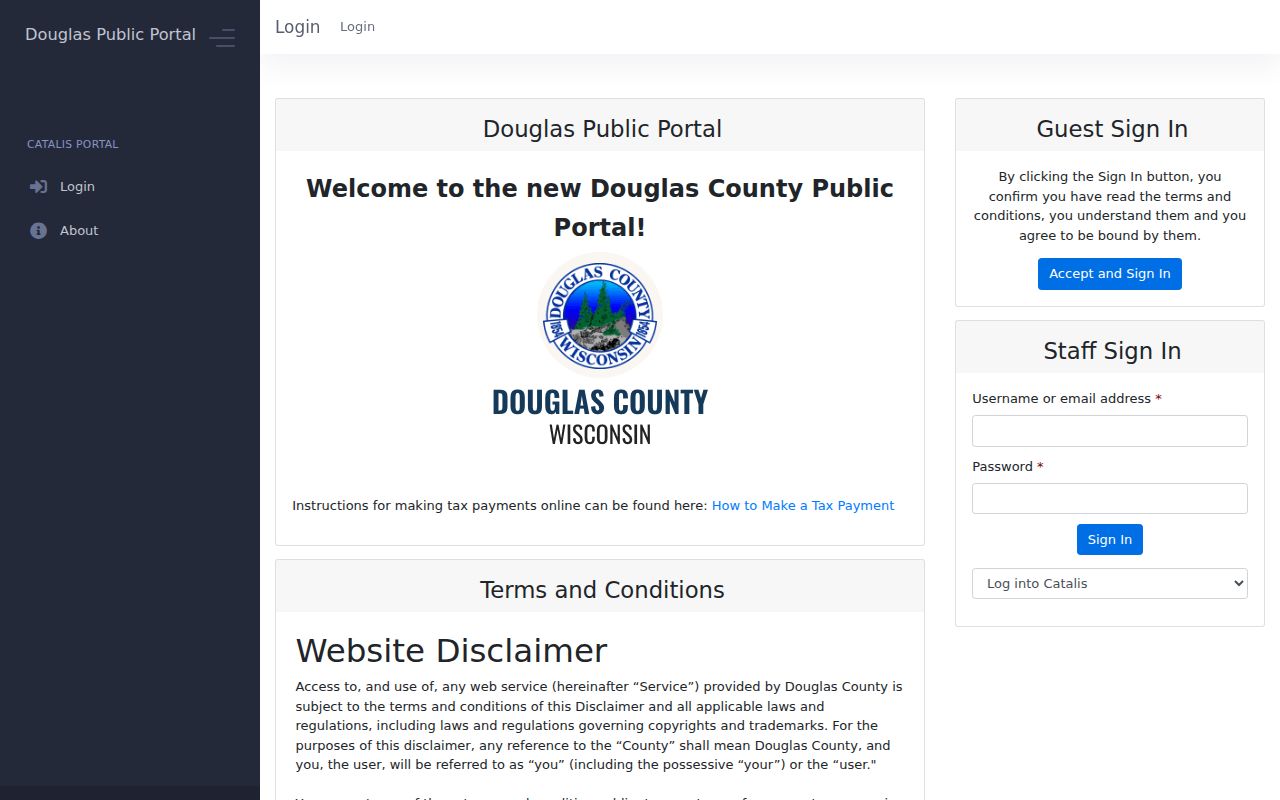
Read the account's current balance and payment record before calling an icon a delinquency ruling.
Douglas County Taxes Flow to Many Districts
The county Treasurer bills and collects for the county, municipalities, school districts, and special districts. Douglas County says roughly 300 taxing authorities certify the levies behind those collections. This is why municipality and district fields matter when two bills are compared. A nearby parcel can sit in a different school or special district. It can differ even with a similar street address.
The interactive "Your Douglas County Taxes" map shows where the dollars go. Treat it as a distribution aid. The parcel account remains the place to confirm a bill, payment, or receipt. Check the account year and parcel number before comparing values. For assessment questions, use the current municipal notice.
Douglas County's 2025 Assessment Rates
County materials describe separate 2025 residential structures. The local-government rate is 6.25 percent. The school rate is 7.05 percent. Other classes follow different rules. A rate or assessment ratio is not a parcel's assessed value, a tax rate, or a sale price. The county also flags 2026 rate changes, so a 2025 figure should not be carried into a later roll.
The 2025 equated roll sample here is a manufacturing entry. It lists local and DOR parcel identifiers, owner and mailing address, legal description, acreage, land, improvement and total values, school and special-district headings, and a manufacturing aggregate ratio. Those fields show how an assessment record is organized. Residential parcel-card labels and values must be checked in GCS or the appropriate municipal roll. Wisconsin DOR explains aggregate assessment ratios and publishes annual sales and ratio reports. Superior's assessment-roll page lists current and prior city rolls and review forms.
Check the parcel's municipality and class before comparing an assessment number with a community ratio.
Find a Douglas County Tax Bill
Search the Treasurer's account by the property details first. Then confirm the parcel and mailing address match the land in question. The county mails statements annually in late January. Full payment is due April 30, while split payments fall on the last day of February and June 15. A weekend deadline moves to the next business day.
- Find the parcel account in the Douglas Public Portal and check the municipality and parcel number.
- Open the current-year statement and review prior-year statements, receipts, and payment history.
- Compare the account's mailing address with the assessment record; confirm any exemption question with the assessor.
- If taxes appear unpaid, verify the actual balance and date with the Treasurer before drawing a conclusion.
- Assessed value
- The assessor's value used within the local property-tax system.
- Levy
- The amount a taxing authority certifies to be collected; the county distributes collections among taxing bodies.
- Tax statement
- The bill for a parcel and year, separate from the assessment roll.
- Tax deed
- A recorded instrument from a tax-deed process; LandShark images begin in February 1951.
Douglas County Assessment Review Is Local
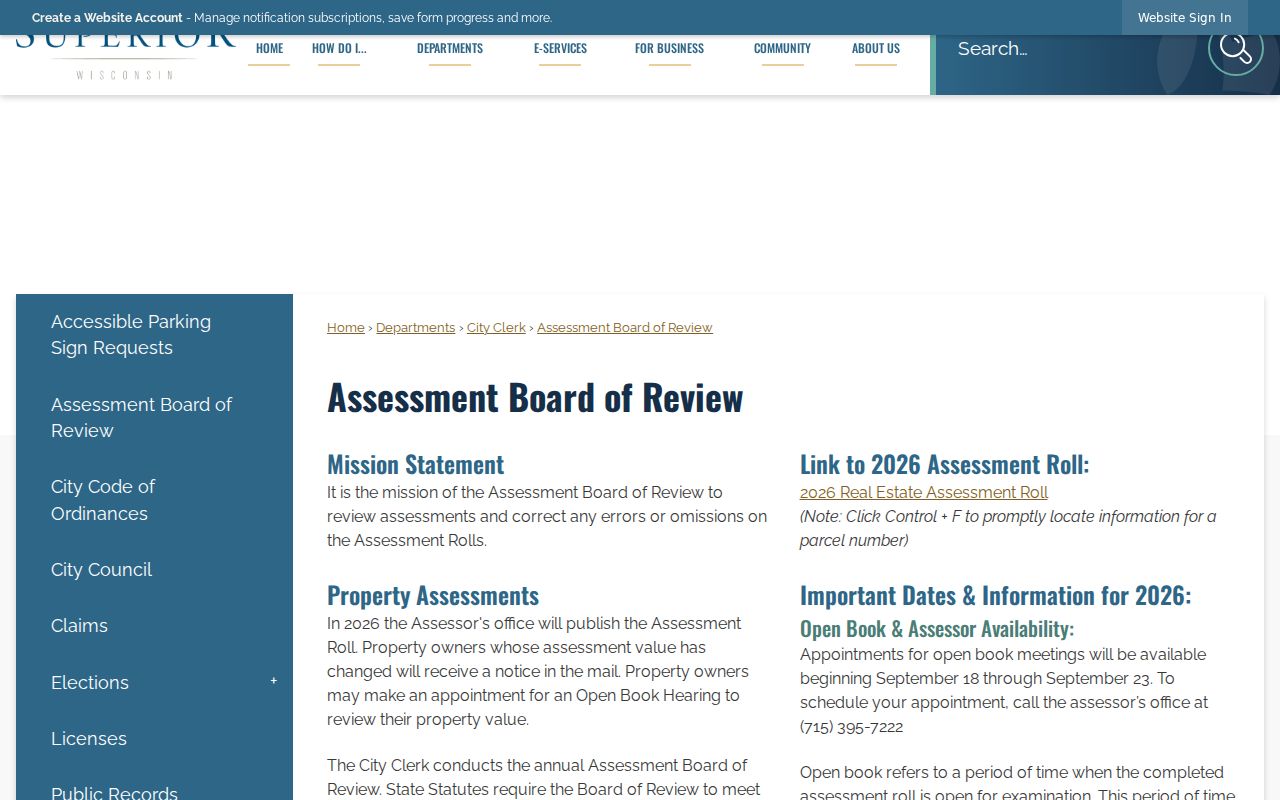
Assessment questions start locally. The assessor and that municipality handle them. Superior posts assessment rolls for 2021 through 2026, plus Board of Review details and appeal forms, and a 2024 revaluation notice described staged review, mailed notices, Open Book discussion, and a later Board of Review route. Those dates are annual, so follow the current city, village, or town notice for the active calendar.
Superior publishes four appeal forms. Form PA-115A covers real property, PA-115B personal property, PA-813 a waiver, and PA-105 agent authorization. Keep the assessment year and municipality with any evidence. No countywide deadline covers every local roll.
Superior's Board of Review page links rolls and materials. Superior's assessed-versus-market explanation shows how the city's estimate relates to assessment ratios.
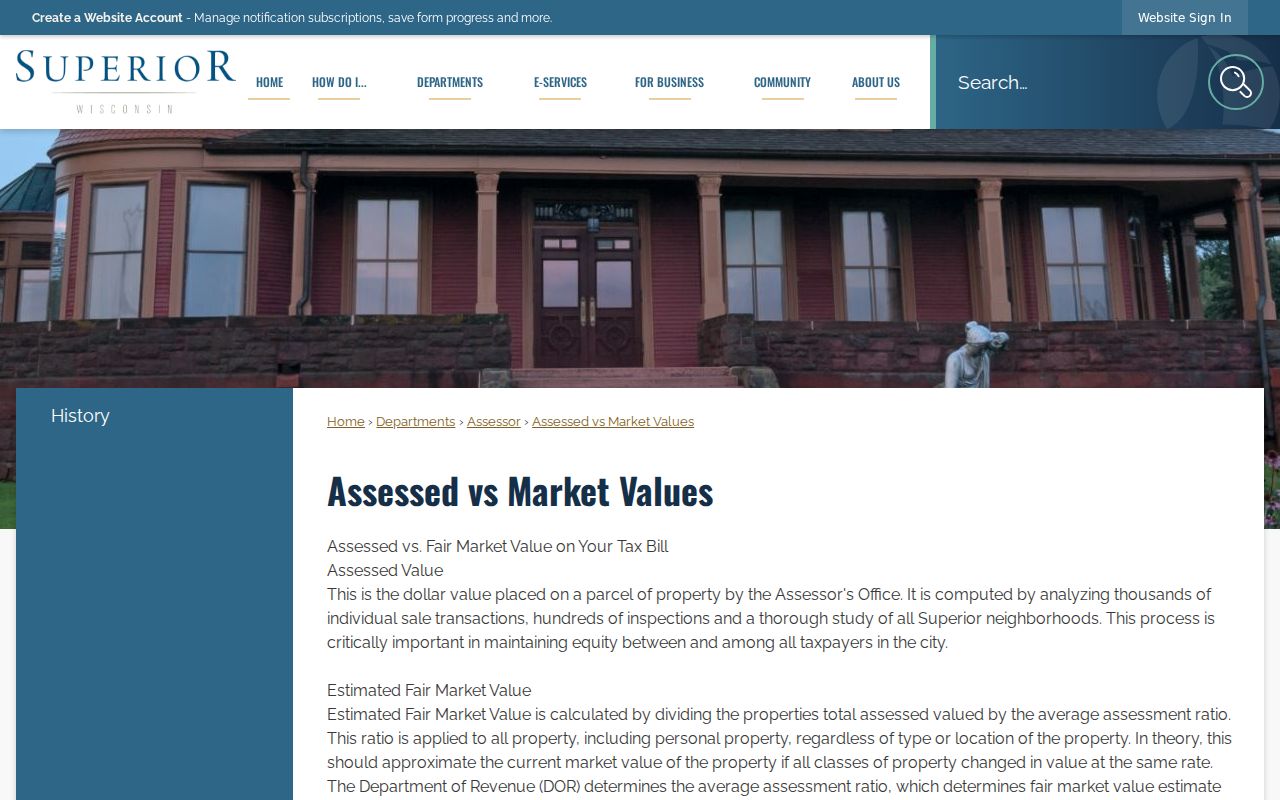
An assessment is an estimate, not a full appraisal.
Douglas County Tax Sale Checks Need More Than One Record
A distressed-property question needs several records at once. Start with the Treasurer's tax account. Pull current and prior statements. Then check WCCA for foreclosure or tax cases, LandShark for lis pendens, judgments, mortgages, releases, and tax deeds, and sheriff notices for any sale. A lis pendens or complaint signals litigation; it does not prove ownership changed.
A tax deed deserves a careful read. Read the instrument itself, checking for later conveyances, redemption events, or court orders. LandShark's tax-deed image run begins in February 1951. Older material and current sale status still need custodian confirmation. County land-sale notices describe county-owned property and warn that a parcel may be landlocked, under water, or not buildable. Verify access, zoning, wetlands, and the actual tax balance before treating any listing as a complete history.
These are separate public-record tracks. A late bill is an account status. A tax deed is a recorded instrument. A foreclosure case is a court matter, and a county land-sale listing concerns property the county itself offers. No single label substitutes for another, so match the parcel number and legal description across the tax portal, court index, deed image, and sale notice before concluding that a tax event changed title.
Could a sale or delinquency affect a purchase? Request the current account status from the Treasurer. Confirm the latest recording with the Register of Deeds. Review any notice for dates, redemption language, and parcel identity, then ask the responsible office about next procedural steps. A public listing or older balance does not by itself confirm current availability, access rights, buildability, or a successful transfer.
Appeal a Douglas County Assessment
Open Book and Board of Review are the local routes. Use them to question how an assessor developed a value, and bring the assessment notice, parcel description, assessment year, and evidence on physical features or comparable sales. Meeting dates and filing steps change yearly, so start with your municipality's notice. Wisconsin DOR ratio reports offer community context. They are not a substitute for evidence about one parcel.
Appeal window. Do not rely on a prior year's date. Check the current Open Book and Board of Review notice issued for the parcel's municipality and follow its filing instructions.
Keep good records. Save the notice, the assessment year, any forms filed, and the evidence you presented. A later tax statement will not explain the assessor's method. An appeal record may sit with a municipal office rather than the county tax portal. When a property changes municipality or classification, check one thing. The review request must name the same parcel and roll year as the challenged assessment.